


![A3e6aeb2 365f 4942 8458 c79264a5a965[1]](https://fischerinvestmentstrategies.com/wp-content/uploads/a3e6aeb2-365f-4942-8458-c79264a5a9651.png)
Many investors are familiar with buying shares of publicly traded companies through the stock market. However, some opportunities exist before a company ever reaches a public exchange. This type of investing is known as pre-IPO investing.
As interest in private markets continues to grow, many investors are asking what pre-IPO investing involves, who can participate, and how it fits into a broader financial plan. Understanding the basics can help you make more informed decisions when evaluating these opportunities.
What Is Pre-IPO Investing?
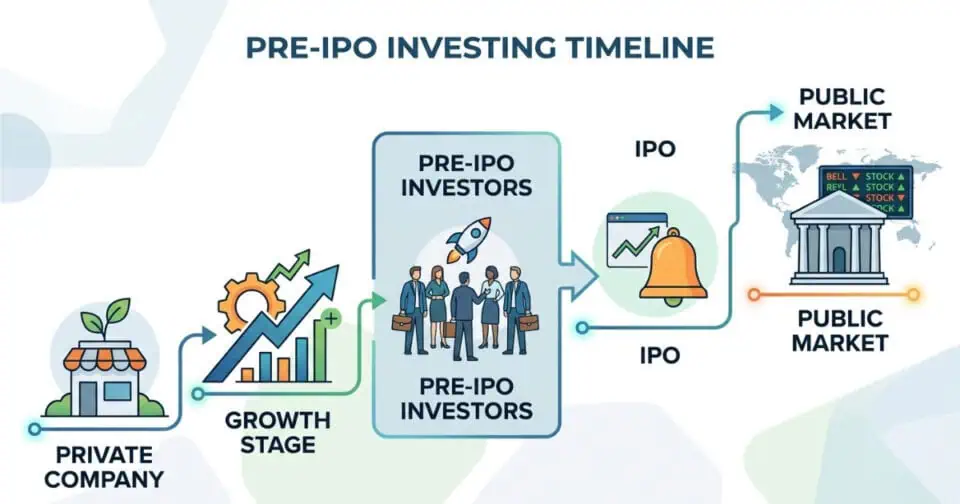
Pre-IPO investing refers to purchasing shares of a privately held company before it completes an Initial Public Offering (IPO).
An IPO is the process through which a private company becomes publicly traded on a stock exchange. Before that transition occurs, shares are typically held by founders, employees, venture capital firms, early investors, and select qualified investors.
In some cases, investors may gain access to shares of private companies through specialized investment vehicles and PRE-IPO investment opportunities that become available to qualified investors.
Pre-IPO investing allows investors to participate before a company becomes available to the broader public market.
Why Are Investors Interested in Pre-IPO Opportunities?
Private companies often experience significant growth before going public. In recent years, many businesses have chosen to remain private longer than companies did in previous decades.
As a result, some of the most substantial growth phases may occur before an IPO takes place.
Investors are often attracted to pre-IPO opportunities because they may provide:
- Exposure to innovative private companies
- Access to growth opportunities before public market participation
- Portfolio diversification beyond traditional stocks and bonds
- Participation in sectors experiencing rapid expansion
While these potential benefits can be appealing, they should always be evaluated alongside the risks involved.
Who Can Invest in Pre-IPO Opportunities?
Many pre-IPO investments are available only to accredited investors.
The U.S. Securities and Exchange Commission (SEC) establishes specific criteria for accredited investor status. Generally, individuals may qualify based on income, net worth, or certain professional certifications.
Because regulations can change and individual circumstances vary, investors should carefully review current SEC guidelines and consult with qualified professionals when determining eligibility.
Accredited investor requirements exist in part because private investments may involve greater complexity, reduced transparency, and higher risk compared to publicly traded securities.
How Does Pre-IPO Investing Work?
The process varies depending on the investment opportunity, but pre-IPO investments generally follow a similar structure.
First, investors gain access to shares of a private company through an approved offering or secondary market transaction.
Unlike publicly traded stocks, these shares are not bought and sold daily on major exchanges. Investors often hold their positions for an extended period while the company continues to grow and pursue future liquidity events.
Potential outcomes may include:
- A future IPO
- An acquisition by another company
- A merger
- Continued private ownership
Because timelines are often uncertain, investors should be prepared for longer holding periods than they may experience with publicly traded investments.

Understanding the Potential Risks
While pre-IPO investing can be attractive, it is important to understand the risks before participating.
One of the most significant considerations is liquidity. Publicly traded stocks can typically be bought or sold during market hours. Private company shares generally cannot.
Other risks may include:
- Limited financial disclosure
- Valuation uncertainty
- Business execution risk
- Regulatory changes
- Extended holding periods
- Potential loss of principal
Even successful private companies may experience setbacks, delays, or changing market conditions that affect investor outcomes.
For this reason, pre-IPO investments are often considered one component of a diversified portfolio rather than a standalone investment strategy.
How Pre-IPO Investments Fit Into a Financial Plan
Investment decisions should always be evaluated within the context of an overall financial plan.
Before considering any private investment opportunity, investors may want to ask:
- Does this align with my long-term goals?
- Am I comfortable with the investment timeline?
- How much liquidity do I need?
- Does this fit my risk tolerance?
- Is my portfolio adequately diversified?
A disciplined approach can help ensure that excitement around a particular company or industry does not overshadow broader financial objectives.
Investment decisions should also be evaluated alongside broader wealth management considerations, including investment management, tax efficiency, and retirement planning goals.
For many investors, pre-IPO opportunities may serve as a complement to a portfolio that already includes traditional investments such as stocks, bonds, retirement accounts, and other long-term holdings.
The Importance of Fiduciary Guidance
Private investments can be more complex than traditional public market investments. Evaluating opportunities requires careful analysis, attention to risk, and an understanding of how the investment supports broader financial goals.
Working with a fee-only fiduciary advisor can help investors assess opportunities objectively. Because fiduciaries are legally obligated to act in their clients’ best interests, they can provide guidance that focuses on long-term planning rather than product sales or commissions.
At Fischer Investment Strategies, we believe every investment decision should support a comprehensive financial strategy rather than be driven by short-term trends or market headlines.
Is Pre-IPO Investing Right for You?
Pre-IPO investing offers a unique way to gain exposure to private companies before they become publicly traded. While these opportunities can be appealing, they also come with important considerations, including liquidity constraints, valuation uncertainty, and longer investment horizons.
Understanding both the opportunities and risks is essential before participating in any private market investment.
Every investor’s situation is different. Factors such as financial goals, risk tolerance, investment experience, and liquidity needs should all be considered before pursuing private market opportunities.
If you would like to learn more about pre-IPO investing or discuss whether these opportunities may fit into your overall financial strategy, schedule a complimentary consultation with Fischer Investment Strategies. Our team can help you evaluate opportunities through the lens of long-term planning and fiduciary guidance.
![Cee8f145 916e 4278 8da7 0b25fb7b81fc[1]](https://fischerinvestmentstrategies.com/wp-content/uploads/cee8f145-916e-4278-8da7-0b25fb7b81fc1.jpg)