


![A3e6aeb2 365f 4942 8458 c79264a5a965[1]](https://fischerinvestmentstrategies.com/wp-content/uploads/a3e6aeb2-365f-4942-8458-c79264a5a9651.png)
For decades, public markets have been the primary way for individual investors to participate in the growth of established companies. But as some businesses remain privately held for longer periods, investors are paying greater attention to what happens before a company reaches the public market.
That has brought pre-IPO investment opportunities into the conversation. From technology companies to businesses in emerging industries, private companies can attract substantial investment and attention before an IPO ever takes place.
For qualified investors, these opportunities can provide another potential source of portfolio diversification. At the same time, private market investing comes with risks and limitations that are important to understand before participating.
What Is Driving Interest in Private Markets?
One reason for growing interest in private markets is that companies can now remain private for longer periods while raising significant amounts of capital.
Historically, companies often pursued an IPO relatively early in their growth cycle. Today, some successful businesses have the ability to raise capital from private investors and institutional sources without immediately becoming publicly traded.
This can mean that a greater portion of a company’s development takes place while it is still privately held.
For investors who qualify for private investment opportunities, that can create interest in gaining exposure to companies before they reach the public markets.
Companies Are Staying Private Longer
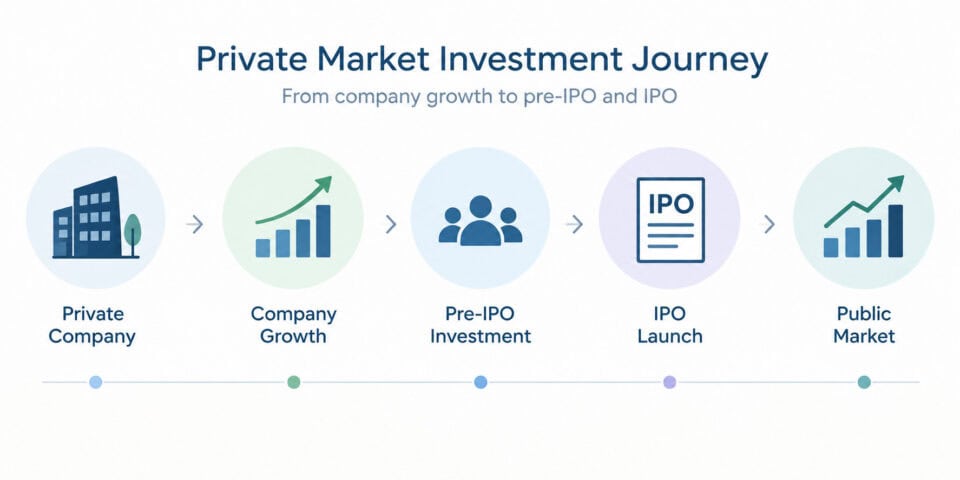
The path from startup to publicly traded company has changed considerably.
Private companies may raise multiple rounds of financing as they expand their operations, develop new products, hire employees, and enter new markets. This can allow a company to grow substantially before deciding whether an IPO is appropriate.
As a result, investors who only participate in public markets may not have access to companies during some of their earlier stages of development.
Pre-IPO investing can provide qualified investors with an opportunity to participate before a company becomes publicly traded, although availability varies by company and offering.
Interest in High-Growth Industries
Investor interest in private markets is also influenced by developments in industries experiencing rapid innovation.
Technology, artificial intelligence, biotechnology, aerospace, and other emerging sectors have produced companies that attract substantial attention while remaining privately held.
When a private company becomes widely discussed, investors may naturally become curious about how they could participate before a potential IPO.
However, popularity should not be confused with investment suitability. A well-known company can still face significant business, valuation, regulatory, and market risks.
Investors should evaluate an opportunity based on the underlying investment rather than simply the amount of attention a company receives.
Pre-IPO Investing Can Provide Access Before an IPO
One of the primary reasons investors explore pre-IPO opportunities is the possibility of gaining exposure to a company before its shares become available on a public exchange.
A traditional IPO makes shares available to a much broader group of investors. Before that point, ownership may be concentrated among founders, employees, venture capital firms, institutional investors, and other qualified investors.
Certain private investment arrangements can provide eligible investors with access to shares before a public listing.
Investors interested in learning more can explore Fischer Investment Strategies’ pre-IPO investment opportunities to understand the types of opportunities that may be available to qualified investors.
Private Markets Can Complement a Diversified Portfolio
Another reason some investors consider private investments is diversification.
A diversified portfolio may include a combination of asset classes, investment strategies, and types of securities. Private investments can represent an additional category alongside traditional public stocks and bonds.
However, diversification does not mean adding every available investment to a portfolio.
Private investments can have different liquidity characteristics, valuation considerations, and risk profiles than publicly traded securities. Their role in a portfolio should therefore be evaluated in the context of an investor’s overall financial plan.
For some investors, a private investment may be one component of a broader strategy. For others, the limited liquidity or level of risk may make it less appropriate.
Understanding the Risks of Pre-IPO Investing
The potential appeal of private markets should always be considered alongside the risks.
One of the most important is liquidity. Unlike publicly traded stocks, private company shares generally cannot be bought or sold whenever an investor chooses. Investors may need to hold an investment for an extended period before a potential liquidity event occurs.
Other considerations can include:
- Valuation uncertainty: Private companies do not have continuously updated public market prices.
- Limited information: Investors may have access to less publicly available financial information than they would with a publicly traded company.
- Business risk: A company’s growth plans may not develop as anticipated.
- Regulatory risk: Changes in laws or regulations can affect a company’s operations or an investment opportunity.
- Longer investment timelines: An anticipated IPO, acquisition, or other liquidity event may take longer than expected—or may not happen.
- Potential loss of capital: As with other investments, investors can lose some or all of the amount invested.
Understanding these risks is an important part of evaluating whether private market investing belongs in an overall investment strategy.

Who Can Invest in Pre-IPO Opportunities?
Not every investor can participate in every private investment opportunity.
Many private offerings are limited to accredited investors who meet specific requirements established under U.S. securities laws. Qualification may depend on factors such as income, net worth, or certain professional credentials and designations.
Meeting the accredited investor definition does not mean that a particular investment is suitable for an individual. It simply means the investor meets the applicable eligibility requirements for certain opportunities.
Investors should review current requirements and consider their own financial circumstances before participating.
What Should Investors Consider Before Investing?
The excitement surrounding a private company can make it easy to focus on its potential while overlooking practical considerations.
Before considering a pre-IPO investment, investors may want to ask:
- How does this opportunity fit into my overall financial plan?
- How long might I need to hold the investment?
- How much liquidity do I need?
- What information is available about the company?
- How is the company being valued?
- What risks could affect the investment?
- How would this investment affect my existing portfolio?
- Am I comfortable with the possibility of losing some or all of the investment?
These questions can help shift the conversation from simply asking whether an investment is exciting to considering whether it makes sense within a broader financial strategy.
Why a Long-Term Financial Plan Still Matters
Private market opportunities should not be evaluated separately from the rest of an investor’s financial life.
An investor may have retirement goals, estate planning considerations, charitable objectives, cash-flow needs, and other financial priorities that affect how much risk and illiquidity they can reasonably take on.
A fee-only fiduciary advisor can help put an investment opportunity into that broader context.
At Fischer Investment Strategies, our team takes a comprehensive approach to investment management and financial planning. The goal is not simply to identify interesting opportunities, but to consider how an investment fits with an individual’s long-term objectives, risk tolerance, and overall financial circumstances.
Is Pre-IPO Investing Worth Considering?
Growing interest in private markets reflects changes in how companies raise capital and how investors access opportunities. Companies can remain private for longer, while some investors seek exposure to businesses before they become publicly traded.
For qualified investors, pre-IPO opportunities may provide access to private companies and potential diversification beyond traditional public markets. However, they also involve important considerations around liquidity, valuation, transparency, risk, and investment timelines.
The fact that an opportunity is private or pre-IPO does not automatically make it appropriate for every investor. Careful due diligence and a broader financial planning perspective are essential.
If you are interested in learning more about private market investing and how these opportunities may fit within your financial strategy, you can contact Fischer Investment Strategies to speak with our fee-only fiduciary team.
![Cee8f145 916e 4278 8da7 0b25fb7b81fc[1]](https://fischerinvestmentstrategies.com/wp-content/uploads/cee8f145-916e-4278-8da7-0b25fb7b81fc1.jpg)