


![A3e6aeb2 365f 4942 8458 c79264a5a965[1]](https://fischerinvestmentstrategies.com/wp-content/uploads/a3e6aeb2-365f-4942-8458-c79264a5a9651.png)
Investors today have more opportunities than ever to participate in the growth of companies at different stages. While most people are familiar with buying shares after a company becomes publicly traded, some investors explore opportunities before a company reaches the public market.
Two terms that often come up in these conversations are pre-IPO investing and IPO investing. Although they are connected, they represent very different stages of a company’s growth and come with different considerations related to access, risk, liquidity, and investment strategy.
Understanding the differences between pre-IPO and IPO investing can help investors make more informed decisions about whether these opportunities align with their broader financial goals.
What Is the Difference Between Pre-IPO and IPO Investing?
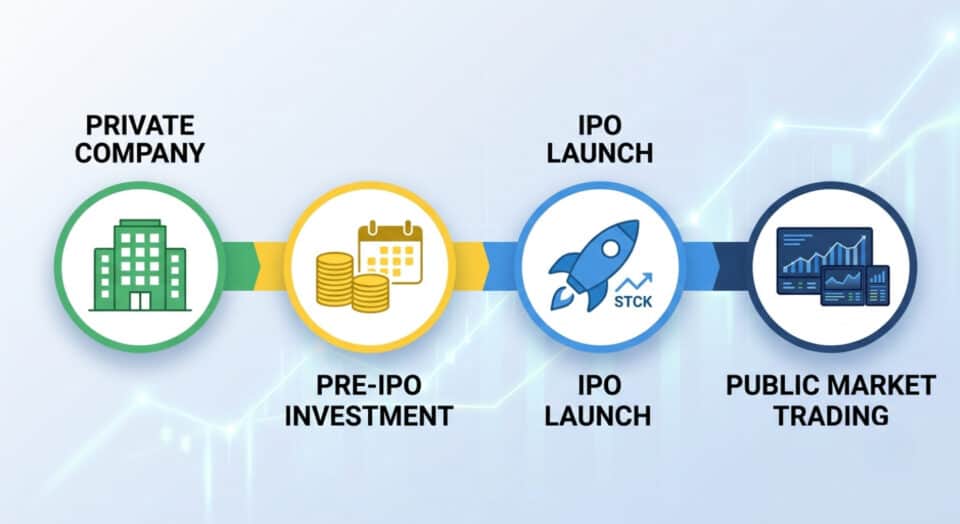
The primary difference between pre-IPO and IPO investing is when an investor gains access to a company’s shares.
Pre-IPO investing involves purchasing shares of a privately held company before it becomes publicly traded. These opportunities are typically available through private placements, secondary transactions, or specialized investment opportunities for qualified investors.
IPO investing occurs when a private company transitions into a publicly traded company by offering shares on a public stock exchange. At this stage, shares become available to a much broader group of investors through traditional brokerage accounts.
In simple terms, pre-IPO investing takes place before a company enters the public market, while IPO investing begins when shares become publicly available.
How Investors Access Pre-IPO and IPO Opportunities
Access is one of the biggest differences between pre-IPO and IPO investing.
Before a company goes public, shares are generally not available to everyday investors through standard brokerage platforms. Pre-IPO investments are often limited to accredited investors, institutional investors, company employees, or individuals who gain access through specific investment channels.
After an IPO, shares are listed on a public exchange, making them available to a much wider range of investors.
However, access alone does not determine whether an investment opportunity is appropriate. Investors should consider how an investment fits into their overall financial plan, including their goals, timeline, and risk tolerance.
For investors interested in learning more about available opportunities, pre-IPO investment opportunities may provide access to private companies before they enter the public markets.
Understanding the Potential Benefits of Pre-IPO Investing
Pre-IPO investing can provide exposure to companies during an earlier stage of their growth.
Some investors are interested in these opportunities because they may offer:
- Access to companies before they become publicly traded
- Exposure to innovative industries and emerging businesses
- Potential participation in private market growth
- Diversification beyond traditional public market investments
Investing before an IPO can also allow investors to participate in a company’s growth journey before broader market participation begins.
However, potential opportunities should always be balanced against the risks associated with private investments.
Understanding the Potential Benefits of IPO Investing
IPO investing provides investors with access to companies once they begin trading publicly.
Some potential advantages include:
- Greater accessibility through brokerage accounts
- More publicly available company information
- Easier buying and selling compared to private shares
- Public market pricing and transparency
Because publicly traded companies are generally required to provide regular financial reporting, investors often have access to more information when evaluating an IPO investment.
However, greater accessibility does not eliminate investment risk. A company’s stock price can fluctuate significantly after going public based on market conditions, investor sentiment, company performance, and other factors.
Comparing the Risks of Pre-IPO and IPO Investing
Both pre-IPO and IPO investing involve risks, but those risks can look different depending on the stage of investment.
Pre-IPO investments may involve:
- Limited access to company financial information
- Uncertainty around company valuation
- Longer investment timelines
- Limited ability to sell shares
- Potential challenges finding buyers
IPO investments may involve:
- Market volatility after the company goes public
- Changing investor expectations
- Stock price fluctuations
- Uncertainty about future performance
A company receiving significant attention before an IPO does not necessarily mean it will deliver strong investment results. Likewise, a publicly traded company with strong initial demand may experience price changes after entering the market.
Careful research and a long-term perspective are important for evaluating any investment opportunity.
Liquidity: A Key Consideration for Investors
Liquidity refers to how easily an investment can be converted into cash.
This is one of the most important differences between pre-IPO and IPO investing.
Publicly traded shares can generally be bought and sold during market hours through a brokerage account. Investors can typically monitor prices and make transactions whenever the market is open.
Private company shares are different. Pre-IPO investments may require investors to hold their shares for an extended period until a liquidity event occurs, such as an IPO, acquisition, or another transaction.
Because of this, investors considering pre-IPO opportunities should carefully evaluate their cash needs and investment timeline.

What Investors Should Consider Before Participating
Before investing in either a pre-IPO opportunity or an IPO, investors should consider several important questions:
- Does this investment align with my overall financial strategy?
- How much risk am I comfortable taking?
- Do I need access to these funds in the near future?
- How does this investment affect my portfolio diversification?
- Do I understand the potential risks and limitations?
A strong investment decision considers more than just a company’s popularity or market attention. It should also account for personal financial goals, long-term planning needs, and overall portfolio strategy.
Working with a fee-only fiduciary advisor can help investors evaluate opportunities objectively and understand how different investments may fit into their broader financial plans.
The Role of Fiduciary Guidance in Private and Public Market Investing
Whether considering pre-IPO opportunities, IPOs, or traditional investments, having a clear financial strategy is essential.
A fiduciary advisor focuses on helping clients make decisions based on their individual circumstances rather than simply promoting investment products. This approach can be especially valuable when evaluating more complex opportunities, including private market investments.
At Fischer Investment Strategies, our team helps clients navigate investment decisions through a comprehensive planning approach designed around long-term goals, risk management, and financial confidence.
Pre-IPO vs. IPO Investing: Choosing the Right Approach for Your Goals
Pre-IPO and IPO investing both provide opportunities to participate in the growth of companies, but they represent very different investment stages.
Pre-IPO investing may offer access to private companies before they reach the public market but often involves limited liquidity and additional complexity. IPO investing provides broader access and greater transparency but still comes with market risks and uncertainty.
The right approach depends on each investor’s financial situation, goals, risk tolerance, and investment timeline.
If you would like to discuss whether private market opportunities or other investment strategies align with your financial goals, schedule a complimentary consultation with Fischer Investment Strategies. Our fee-only fiduciary team can help you evaluate investment options as part of a comprehensive financial plan.
![Cee8f145 916e 4278 8da7 0b25fb7b81fc[1]](https://fischerinvestmentstrategies.com/wp-content/uploads/cee8f145-916e-4278-8da7-0b25fb7b81fc1.jpg)